
Georgia Wine Trail Guide: Kakheti for Indian Travelers
Co-Founder & Trip Designer, Trolly Good Fellow
Eight thousand years. That is how long Georgians have been making wine — continuously, in the same valleys, using a method so old and so distinctive that UNESCO lists it as Intangible Cultural Heritage. France has been making wine for roughly 2,600 years. Georgia had a 5,000-year head start, and every Georgia tour packages itinerary we design gives the wine country a full day because it is, honestly, the soul of the whole country.
Why Georgia Is the Birthplace of Wine
Here, wine is not a luxury product. It is how families mark births, weddings, and harvests; it is the centre of the supra feast where a tamada (toastmaster) leads toasts that get progressively more poetic as the evening goes on. Vines grow in courtyards, monks make wine in monasteries, and a very good bottle costs ₹200-400 — often less than bottled water at a European cafe.
This guide covers the Kakheti wine region the way I brief our own groups before Day 5 of our Georgia itinerary: what qvevri actually is, what to taste, where Sighnaghi fits, and how to get bottles home to India intact.
What Is Qvevri? The 8,000-Year-Old Method
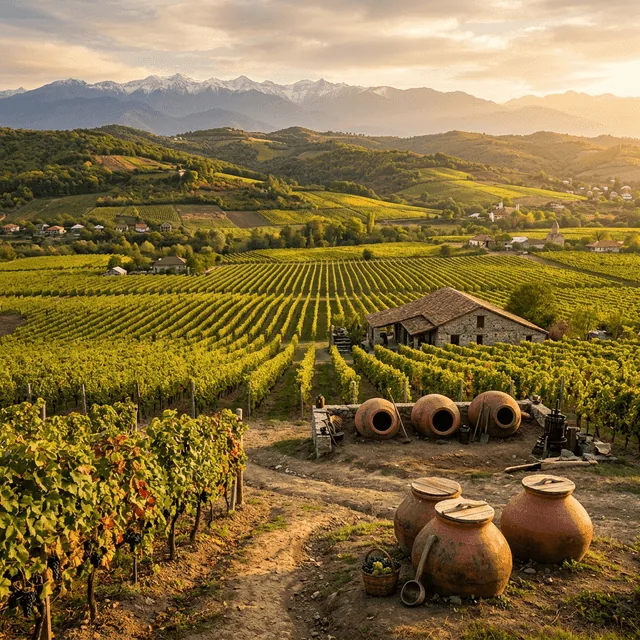
A qvevri is a huge egg-shaped clay vessel — sometimes big enough to stand inside — that is buried up to its neck in the earth. Grapes are pressed and poured in whole: juice, skins, stems, everything. The earth keeps the temperature stable, the wine ferments naturally on its skins for months, and no steel tank or oak barrel ever touches it.
The result of this method, applied to white grapes, is Georgia's signature: amber wine (sometimes called orange wine in the West). Extended skin contact gives white wine a deep honey-amber colour, real tannic grip, and flavours of dried apricot, walnut, and tea. The first sip is genuinely confusing if you are expecting a crisp white — by the third sip, most people are converts. Nearly every natural-wine bar from Copenhagen to Bandra now sells "orange wine" at a premium; in Kakheti you drink the original, ladled straight from a vessel in the ground, often poured by the person who made it.
Because qvevri wine ferments on skins with nothing added, most of it is also naturally vegan — a detail our vegetarian travelers appreciate.
Kakheti — The Wine Heartland
Kakheti is Georgia's easternmost region, about two hours' drive from Tbilisi, and it produces the large majority of the country's wine. The landscape is the Alazani Valley: a wide green corridor of vineyards running along the base of the Greater Caucasus, so that you taste wine with snow peaks on the horizon in almost every direction.
The region works beautifully as a day trip from Tbilisi — which is exactly how our groups do it — but it rewards an overnight if you have the time. The classic circuit stacks three stops. Bodbe Monastery, a 9th-century convent in cypress gardens with sweeping Alazani Valley views, where St. Nino — who brought Christianity to Georgia — is buried. Sighnaghi, the walled hilltop town (more on it below). And a family winery visit, which is the heart of the day: cellars of buried qvevri, a walk through the vines, and a tasting that flows into a full Kakhetian feast of bread baked in clay ovens, cheeses, grilled vegetables, and endless refills.
The wineries we partner with are small, family-run estates rather than industrial tasting rooms — the person explaining the qvevri is usually the winemaker, and the "tasting portion" in Kakheti is a glass, not a splash.
What Indian Wine Drinkers Should Know
If your wine reference points are Sula, Fratelli, or Grover, Georgian wine is a different planet — in the best way. Three names will carry you through any menu or tasting.
Saperavi is the flagship red: deep, dark, full-bodied, with black fruit and spice. It is the most familiar entry point for Indian palates raised on bold reds, and it pairs absurdly well with the walnut-and-spice backbone of Georgian food (and would hold its own next to a mutton curry).
Rkatsiteli is the workhorse white grape. Made in steel it is crisp and citrusy — the easy gateway. Made in qvevri, the same grape becomes amber wine: tannic, nutty, completely different. Tasting both versions side by side is the fastest way to understand what the clay vessel does.
Amber wine deserves one warning: do not serve it ice-cold or judge it as a white. Treat it like a light red — slightly cool, with food — and it opens up beautifully.
Sweet-wine drinkers should ask for Kindzmarauli, a naturally semi-sweet Saperavi. And non-drinkers are never left out at a Georgian table: fresh grape juice, compotes, and the entire food side of the feast are the point too.
Sighnaghi — The City of Love
Sighnaghi is the postcard of Kakheti: a small 18th-century hilltop town wrapped in a defensive wall with 23 towers, its pastel houses and wooden balconies looking straight across the Alazani Valley to the wall of the Caucasus. Georgians nicknamed it the "City of Love" — its wedding registry famously operates round the clock, and couples travel here from across the country to marry with that view behind them.
For travelers, it is the perfect two-hour wander between winery visits: walk a stretch of the medieval wall, browse carpet and churchkhela shops on the cobbled lanes, and settle onto a terrace restaurant with a glass of Saperavi and khachapuri fresh from the oven. On our honeymoon customisations we often add a Sighnaghi overnight — sunrise over the valley from the town walls, before the day-trip crowds arrive, is one of the quietly spectacular moments in the whole country.
It is also simply the best place in Kakheti to buy wine to carry home, which brings us to logistics.
Bringing Georgian Wine Home to India
The practical question every wine lover asks on Day 5: how much can I take back?
The allowance: Indian customs permits 2 litres of alcoholic beverages per adult passenger duty-free — that is two standard 750ml bottles with headroom, or three if you accept possible duty on the excess. A couple traveling together can legally carry four bottles duty-free between them.
Packing: Wineries and Sighnaghi wine shops will bubble-wrap bottles, and many sell padded wine sleeves — worth the ₹200. Pack bottles in the centre of your check-in bag surrounded by clothes; never in cabin baggage, as security will confiscate them at the gate.
What to buy: A qvevri amber wine you cannot get in India, a good Saperavi from the estate you actually visited, and a bottle of Kindzmarauli for the sweet-toothed relatives. Budget ₹300-800 per bottle for genuinely excellent estate wine — the same quality would cost 4-5x in an Indian import shop, where Georgian wine has only begun appearing.
And leave one slot in the bag for churchkhela — the walnut-and-grape-must candy strings that hang in every shop. They are made from the same harvest as the wine and travel perfectly.
Visit the Wine Trail with TGF
Kakheti is Day 5 of our standard Georgia itinerary — placed deliberately near the end of the trip, when the group has bonded enough for the supra toasts to get properly enthusiastic. The day includes Bodbe Monastery, free time in Sighnaghi, a private family winery visit with qvevri cellar tour, and the full Kakhetian feast with wine pairing. Wine-focused travelers can extend it: we build custom routes with a Sighnaghi overnight, additional estates, and harvest-season (September-October) departures timed to the rtveli grape harvest, when wineries let visitors join the picking and pressing.
Our Georgia trips run May through October in small groups with departure-specific sizes and start at ₹54,999 for 6 days all-inclusive — the wine day, tastings, and feast included, with zero visa paperwork for Indian passport holders. Message us on WhatsApp at +91 8557062245 and tell us your dates; if you want the harvest, say so early, because those departures fill first.
Frequently Asked Questions
Is Georgian wine actually good?
Yes — Georgia is the world's oldest wine culture (8,000 years, UNESCO-listed qvevri method), and its amber wines are now poured in natural-wine bars worldwide at premium prices. In Kakheti, estate-quality bottles cost ₹200-800. Saperavi reds suit Indian palates raised on bold wines; qvevri amber wine is a unique style you cannot properly taste anywhere else.
What is amber wine?
White wine fermented on its grape skins in buried clay qvevri vessels, giving it an amber colour, tannins like a red, and flavours of dried apricot, walnut, and tea. It is Georgia's signature style — called orange wine in the West — and is best drunk slightly cool with food, like a light red.
How much wine can I bring back to India from Georgia?
Indian customs allows 2 litres of alcohol per adult duty-free — comfortably two 750ml bottles per person, four per couple. Pack bottles bubble-wrapped in the middle of checked luggage only. Estate bottles cost ₹300-800 in Kakheti; the same wines cost several times more from Indian importers.
When is the best time for the Georgia wine trail?
September-October, during the rtveli grape harvest — vineyards are golden, wineries are pressing fresh grapes, and some let visitors join the harvest. May-August is also excellent, with green vineyards and clear Caucasus views. Our Georgia group departures run May through October.
Is Kakheti worth it for non-drinkers?
Yes. The wine day is equally about Bodbe Monastery's valley views, the walled hilltop town of Sighnaghi, and the Kakhetian feast — clay-oven bread, cheeses, grilled vegetables, and fresh grape juice. Several of our happiest Kakheti travelers do not drink at all; the supra table culture is the real experience.
Go deeper — month & package guides
Plan a trip around you
Explore our trips or speak with the team about your dates, budget and travel requirements.