Great Migration Kenya from India: Months, Mara Crossings & Real Costs
Co-Founder & Operations Head, Trolly Good Fellow
The One Wildlife Event Worth Planning a Year Around
I run operations for every departure we sell, and no trip generates WhatsApp messages like our Kenya safari package from India in migration season. The texts arrive at odd hours — a video of two thousand wildebeest pouring down a riverbank, dust and spray and crocodiles, shot on a phone from an open-roof 4x4. Then the same message, every time: "Hithu, I cannot believe this is real."
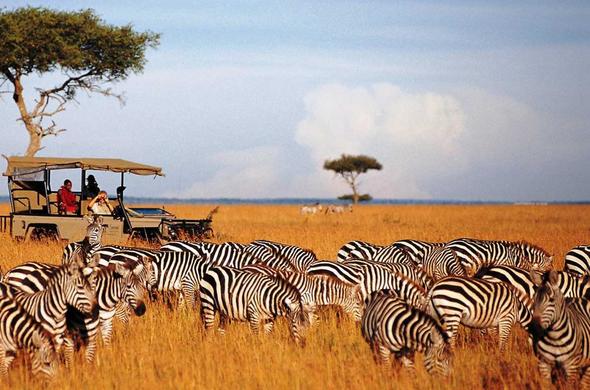
The Great Migration is the largest overland animal movement on Earth — roughly 1.5 million wildebeest plus hundreds of thousands of zebras and gazelles grinding a clockwise loop between Tanzania's Serengeti and Kenya's Masai Mara. For most of the year it belongs to Tanzania. But between July and October the herds are in Kenya, and the Mara river crossings — the scene from every documentary you have ever watched — happen on the Kenyan side.
Here is what this post covers, because I get these five questions weekly: exactly which months the crossings happen, what you see in July-October versus the rest of the year, how our fixed every-Tuesday departure is built to catch it, the honest rupee budget, and what to pack. No mystery pricing, no "contact us for details." Numbers first.
When Exactly Is the Great Migration in Kenya? (2026 Timing)
The short answer for 2026: the first herds typically reach the Masai Mara in mid-to-late July, the Mara river crossings peak through August and September, and activity can stretch into early October before the herds drift back south toward the Serengeti. That window has held for decades, with the edges wobbling year to year.
The honest answer is that wildebeest do not read brochures. The herds follow rain — they chase fresh grass, and the pace of the rains in the northern Serengeti decides when they mass on the riverbanks. The 2025 season ran later than usual, with crossings continuing well into September and some spilling into October, and guides I trust in the Mara expect 2026 could lean the same way.
Two things matter more than picking a "perfect" date. First, crossings are not a scheduled event — herds can stack up at the river for days, then cross three times in one afternoon. Time in the reserve beats precision timing, which is why our itinerary sits in the Mara for three nights rather than the drive-through one-nighters some operators sell. Second, even in peak season the crossing is a bonus, not the whole show: a million-plus animals on the plains, and the lion, cheetah and hyena traffic that follows them, is the guaranteed part.
If you want the fattest odds in 2026, book an August or September Tuesday. July works if you want the arrival drama and the driest tracks; early October is the quieter gamble.
July to October vs the Rest of the Year — What You Actually See
July — the arrival. Long columns of wildebeest pour in from the south, and it is the driest month in the Mara: our 10-year climate data shows just 4 rain days and 16 mm of rain, with highs around 27°C. First crossings often fire in the second half of the month.
August — the classic peak. The main herds are in, river crossings are at their most frequent, and predator action is relentless. This is also peak vehicle season, which is exactly why a guide who knows the quiet crossing points earns his tip.
September — my personal pick. Crossings continue, the August crowd thins slightly, and the light turns golden for photographers. Highs around 28°C, mornings a crisp 15°C.
October — the herds begin drifting back south. Early October can still deliver a crossing (2025 proved it), and the reserve is noticeably calmer. Later in the month you are watching the tail end.
November to June — the migration is in Tanzania (the famous calving happens in the southern Serengeti around January-March). But here is what most Indian travelers do not know: the Mara's big cats do not migrate. Lion prides, leopards, cheetahs, elephants, giraffes and the rest are resident year-round, and from January to June the Mara's daily fee for foreign visitors halves to $100. If your leave falls outside migration season, you still get a full Big Five safari — you just skip the river theatre.
How Our Every-Tuesday Departure Is Built to Catch It
Kenya is the one destination where we run a departure every single Tuesday, year-round — no waiting for a group to fill, no date roulette. Land in Nairobi on a Tuesday, fly out the following Monday. Seven days, six nights, capped at 12 travelers per vehicle group so every seat is a window seat.
The route is deliberately sequenced. Day 1 is Nairobi with a welcome dinner and briefing. Day 2 visits the David Sheldrick Elephant Orphanage, then drops through the Great Rift Valley to Lake Nakuru — flamingos, giraffes and one of Kenya's best rhino populations — for two nights. Days 4 to 6 are the main event: three nights in a luxury tented camp in the Masai Mara, with full-day game drives, a guided bush walk with Maasai warriors, a village visit, and an optional night safari (₹3,000). Day 7 is a final game drive en route back to Nairobi for evening flights.
Three nights in the Mara is the design decision that matters for the migration. Crossings happen when they happen; with two full days plus two half-days inside the reserve, our guides can park near a massing herd and wait, radios open to every other driver in the network. I will say plainly what glossier brochures will not: no operator on Earth can guarantee you a river crossing. What we can guarantee is maximum time in the right place in the right months, with guides who have watched hundreds of them.
The Real Budget in INR — Where ₹1,20,000 Actually Goes
Our 7-day Kenya safari is ₹1,20,000 per person on twin sharing. Before you compare that with a beach holiday, understand what safari economics look like — because Kenya is not a budget destination, and anyone quoting you dramatically less is cutting something you will feel.
Park fees alone are enormous. From July to December 2026, the Masai Mara charges foreign visitors $200 per day — roughly ₹17,000 a day, per person, just to be inside the reserve. Add Lake Nakuru's daily fees and conservation charges and a meaningful slice of your package is government fees before a single night's accommodation. Our price includes all of them, plus every meal, the luxury tented camp, 4x4 game drives, guide, transfers and drinking water.
What you add on top:
- Return flights from India: ₹35,000-55,000. Kenya Airways flies Mumbai-Nairobi direct in about 6.5 hours; one-stops via Addis Ababa, Dubai or Doha serve other metros.
- Kenya eTA (the visa replacement): about $30-34, roughly ₹2,600, applied online.
- Tips for guide and camp staff: budget ₹4,000-8,000 for the week — it is customary and earned.
- Optional hot air balloon over the Mara at dawn: ₹15,000. Optional night safari: ₹3,000.
Realistic all-in total: ₹1.65-1.9 lakh per person. For the single greatest wildlife spectacle on the planet, watched from ten feet away, I consider that the best value in long-haul travel.
What to Pack for the Mara (From Someone Who Forgot the Fleece)
The Mara sits at about 1,600 metres, and the temperature swing catches every first-timer: mornings around 14-15°C in an open vehicle moving at 40 km/h feel genuinely cold, and by lunch it is 27°C. On my first trip I packed like it was Goa. Never again.
Layers, not bulk. A fleece or light down jacket for the 6 AM game drive, a t-shirt underneath for noon. One warm layer is non-negotiable.
Neutral colours. Khaki, olive, brown, grey. Bright white marks you out on the plains; avoid dark blue and black on bush walks — tsetse flies are drawn to them.
The gear that earns its space: binoculars (8x42 if you are buying — one pair between two people minimum), a camera with your longest lens plus double the memory cards you think you need, a power bank since tented camps often charge devices only at set hours, and a buff or cotton scarf for dust on game drives.
The boring essentials: sunscreen, a wide-brim hat, insect repellent, personal medication in hand luggage, and small US dollar bills for tips. Soft duffel bags beat hard suitcases in safari vehicles.
Leave the drone at home — Kenya requires permits that tourists will not get, and reserves confiscate them. And pack half the clothes you planned: camps offer same-day laundry, and nobody in the Mara is judging your outfit repeats. The wildebeest certainly are not.
Booking Windows, the eTA & Getting Your Tuesday
Migration-season demand is real. Mara camps sell out months ahead for August and September, and our 12-seat caps mean specific Tuesdays close early — for the 2026 peak we recommend confirming 3-6 months out. A 30% advance holds your seat; the balance is due 30 days before departure.
Paperwork is refreshingly light. Kenya scrapped its old $50 e-Visa in 2024; Indian passport holders now apply online for an eTA (~$30, about ₹2,600 — closer to $34 with card fees) at etakenya.go.ke, approved in around 3 working days, valid for stays up to 90 days. You will also want a yellow fever vaccination certificate — get it at a government-approved centre at least 10 days before flying, and carry the yellow card.
If your dates are flexible, tell us — we will point you at the Tuesday with the best herd reports rather than just the next available seat. Message us on WhatsApp at +91 8557062245 for the current departure calendar and live availability, or browse the full Kenya safari itinerary day by day. The wildebeest keep their side of the appointment every year. The only question is whether you are standing at the river when they do.
Frequently Asked Questions
Which months can you see the Great Migration in Kenya?
The herds are in Kenya's Masai Mara from roughly mid-July to October. The famous Mara river crossings peak in August and September, with first crossings often in late July and stragglers into early October. Exact timing shifts each year with the rains — the 2025 season ran later than usual — so August-September departures give the best odds.
Is a Mara river crossing guaranteed on a migration safari?
No, and any operator who guarantees one is being dishonest. Herds can wait at the river for days or cross three times in an afternoon. What improves your odds dramatically is time in the reserve — our itinerary spends three nights in the Masai Mara with full-day drives, and in peak months the overwhelming majority of our groups witness at least one crossing. The million-strong herds and the predators that follow them are the guaranteed part.
How much does a Kenya migration safari cost from India?
Budget ₹1.65-1.9 lakh per person all-in: our 7-day group safari is ₹1,20,000 (all park fees, meals, tented camp, game drives), plus ₹35,000-55,000 return flights, ~₹2,600 for the Kenya eTA, and ₹4,000-8,000 in tips. Note that Masai Mara park fees alone are $200 per day per person from July to December 2026 — safari pricing is mostly fees and logistics, not markup.
Do Indians need a visa for Kenya?
Indians no longer need a traditional visa — Kenya replaced its $50 e-Visa with an electronic travel authorisation (eTA) in 2024. Apply online at etakenya.go.ke: it costs about $30 (roughly ₹2,600, ~$34 with card fees), takes around 3 working days, and covers stays up to 90 days. Carry a yellow fever vaccination certificate as well.
Kenya or Tanzania — which is better for the Great Migration from India?
It depends on the month. July to October the river-crossing action is on Kenya's side in the Masai Mara; the rest of the year, including the January-March calving season, the herds are in Tanzania's Serengeti. For Indian travelers, Kenya is usually the more practical pick: direct Mumbai-Nairobi flights, a simpler eTA, and a more compact circuit that fits a 7-day trip.
Is the hot air balloon safari worth ₹15,000?
In migration season, yes — floating at dawn over plains carpeted with wildebeest is the single best vantage point on the spectacle, and it ends with a bush breakfast. Outside July-October it is still beautiful but less dramatic, and I would put the money toward the night safari (₹3,000) and better binoculars instead. Book the balloon when you book the trip; dawn slots sell out in peak months.
Go deeper — month & package guides
Ready to explore Egypt?
Browse our handcrafted Egypt tour packages. Small groups capped at 15, all-inclusive pricing, and end-to-end e-Visa and Letter of Guarantee support.