
Tbilisi Things to Do: 48 Hours in Georgia's Capital
Updated
Co-Founder & Trip Designer, Trolly Good Fellow
Tbilisi is the city I use to ruin people's future holidays, because everywhere after it feels overpriced. It anchors every one of our Georgia tour packages, and 48 hours is exactly enough to understand why our travelers keep going back: a 1,500-year-old capital of leaning pastel houses and carved wooden balconies, natural hot springs steaming under the oldest district (Tbilisi literally means "warm place"), a fortress you reach by cable car, and dinners of khachapuri and qvevri wine that cost less than a Bengaluru brunch.
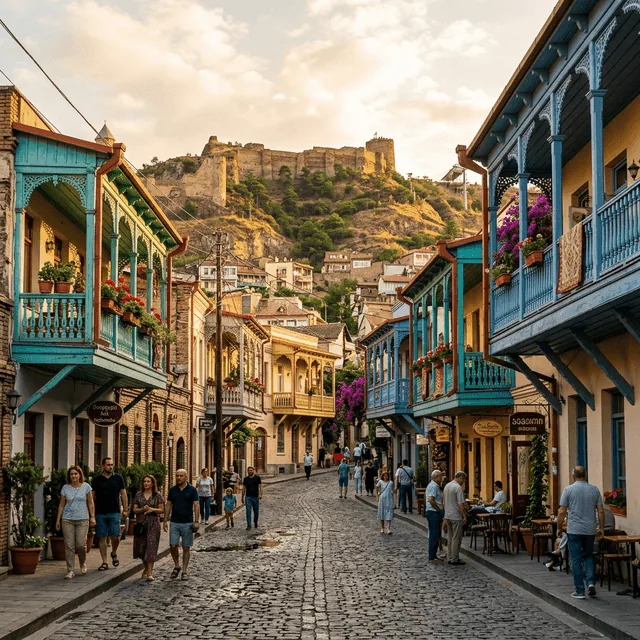
Tbilisi in 48 Hours — Europe's Best Kept Secret
The practical case is just as strong. Georgia's e-visa is a simple online application (about $20 plus service charges — apply a month out, as processing can take two working weeks or more; visa-free entry if you hold a valid US/UK/Schengen/Gulf visa or residence permit), flights connect from every metro via Doha, Istanbul, or Dubai, the city regularly ranks among the safest capitals in Europe, and 1 Lari is about ₹31, so a taxi across town is ₹100-200 and a proper restaurant meal ₹300-500.
Here is the exact 48-hour plan I give friends, hour by hour, with the mistakes already removed.
Day 1 Morning: Old Town & Narikala Fortress
Start where the city started. Ride the cable car from Rike Park up to Narikala Fortress, the 4th-century citadel on the ridge above Old Town — the ticket costs pocket change and the view is the single best orientation to Tbilisi: church domes, tiled bathhouse roofs, the river, and the mountains beyond.
Then walk down instead of riding back. The descent drops you through the most photogenic tangle of streets in the Caucasus — houses stacked at impossible angles, grapevines over doorways, courtyards glimpsed through carved gates. Detour to the Mother of Georgia statue on the ridge (sword in one hand for enemies, wine bowl in the other for guests — the most accurate national summary ever cast in aluminium), then wind down past the Juma Mosque into the lanes of Old Town proper.
Refuel with your first khachapuri of the trip — the Adjarian version, a bread boat holding molten cheese, butter, and a barely-set egg, is a rite of passage. One between two people, honestly. You will not listen. Nobody does.
Day 1 Afternoon: The Sulfur Baths
The afternoon belongs to Abanotubani, the sulfur bath district at the foot of the fortress — the brick domes you saw from above are bathhouses fed by natural hot springs, and they have been the city's social heart for centuries. Alexander Pushkin bathed here and left a five-star review carved into history: he claimed he had never encountered anything more luxurious.
Book a private room rather than the public pools — ₹600-1,200 buys your group its own marble pool of naturally hot (35-43°C) sulfur water for an hour. Add the traditional kisi scrub: an attendant in a rough mitt removes a layer of skin you had grown attached to, followed by a soap-cloud massage. You emerge lightheaded, pink, and more relaxed than you have been since childhood.
Two tips from experience: go in the afternoon, not straight after a heavy lunch, and carry a water bottle — the heat is no joke. The faint eggy smell of the sulfur stops registering after five minutes and the mineral water leaves your skin absurdly soft.
Day 1 Evening: Bridge of Peace & a Rooftop Dinner
Tbilisi at night is when the city's two centuries shake hands. Walk the Bridge of Peace — the glass-and-steel pedestrian wave over the Mtkvari River that lights up with thousands of LEDs after dark — with the illuminated Narikala Fortress glowing gold on the ridge behind it. The old and new city framed in one slow crossing.
For dinner, book a rooftop or terrace restaurant in Old Town and order like a Georgian: khinkali (pleated soup dumplings — hold the topknot, bite, slurp, never use a knife), badrijani (eggplant rolls with walnut paste), lobio bean stew in a clay pot, and a carafe of house qvevri wine, which in Tbilisi is often cheaper than imported water. Dinner for two with wine lands around ₹1,500-2,500 at even the scenic places.
If the evening still has fuel in it, Old Town's wine bars pour dozens of small-estate Georgian wines by the glass — ask for an amber wine flight and let the sommelier talk. They always want to talk. It is wonderful.
Day 2 Morning: Mtskheta — the UNESCO Day Trip
Day 2 starts with the easiest UNESCO World Heritage excursion in Europe: Mtskheta, Georgia's ancient capital, is only a 20-minute drive from Tbilisi. Taxis will do the half-day round trip for a few hundred rupees; every Georgia itinerary we run includes it.
Go first to Jvari Monastery (585 AD), the stone church on the clifftop above town. It stands exactly over the confluence of the Mtkvari and Aragvi rivers, and you can see the two currents — visibly different colours — meeting below. Russian poets wrote about this view; your camera roll will understand why.
Down in town, Svetitskhoveli Cathedral (1010 AD) is the spiritual centre of the nation — the holiest church in Georgia, built where Christ's robe is said to be buried, its walls layered with a thousand years of frescoes. Dress modestly: shoulders and knees covered, and women are offered headscarves at the door. The cobbled lanes around the cathedral are full of churchkhela and spice stalls — ideal for edible souvenirs before you head back for lunch in the city.
Day 2 Afternoon & Evening: Dry Bridge Market, Fabrika & Polyphonic Singing
Spend the afternoon at Tbilisi's two best browsing grounds. The Dry Bridge flea market is a daily open-air museum where you can actually buy the exhibits: Soviet medals and cameras, hand-hammered copper, old carpets, vintage jewellery, and paintings by the artists sitting beside them. Bargain gently — a smile and a counter-offer, not a battle.
Then cross into the Marjanishvili district for Fabrika, a hulking Soviet sewing factory reborn as the city's coolest courtyard — cafes, studios, concept stores, and murals, full of young Tbilisi from mid-afternoon onward. It is the best place in the city to understand that Georgia is not a museum; it is a very alive country that happens to own extraordinary history.
Close the 48 hours with the meal that outranks every monument: dinner at a traditional restaurant with live polyphonic singing — the layered, haunting Georgian harmony that UNESCO recognises as Intangible Cultural Heritage. When three singers stand and open a supra song over the sound of a packed dining room, conversation stops mid-sentence. Order the works — pkhali, khachapuri, mushroom khinkali, a jug of Saperavi — and stay late. This dinner is the memory travelers mention first, months after the trip.
Where to Stay & Getting the Trip Booked
Stay in or beside Old Town for a first visit — boutique hotels in restored merchant houses run ₹3,000-6,000 a night and put everything on this itinerary within walking distance. The Marjanishvili/Fabrika side of the river is the budget-and-cool alternative, and Rustaveli Avenue suits travelers who want wide-boulevard grandeur and museums at the doorstep.
Vegetarians relax: khachapuri, lobio, badrijani, ajapsandali, pkhali, and cheese or mushroom khinkali mean half the national cuisine is already meat-free — no special requests needed.
Beyond 48 hours, Tbilisi is the perfect base: Kazbegi and the Gergeti Trinity Church make a spectacular full-day mountain trip, the Kakheti wine region another, and Borjomi or Uplistsikhe cave city an easy overnight. Our 6-day Georgia group tours stack all of it — Tbilisi, Kazbegi, Kakheti, and Mtskheta — from ₹54,999 all-inclusive, in small groups with departure-specific sizes, departing May through October. Message us on WhatsApp at +91 8557062245 and we will match you to the next departure.
Frequently Asked Questions
How many days do you need in Tbilisi?
48 hours covers the essentials: Old Town and Narikala Fortress, the Abanotubani sulfur baths, Bridge of Peace, a Mtskheta UNESCO half-day, Dry Bridge market, and Fabrika. Add a third day for the National Museum, Mtatsminda funicular, and slower wine bars — or use extra days for Kazbegi and Kakheti trips, which each need a full day.
Is Tbilisi safe for Indian travelers?
Yes — Tbilisi regularly ranks among the safest capital cities in Europe. Solo and women travelers consistently report feeling comfortable walking Old Town at night. Standard tourist-city awareness applies at crowded markets, tap water is drinkable, and Georgians treat guests as, in their saying, 'a gift from God.'
Are the Tbilisi sulfur baths worth it?
Absolutely — they are most travelers' favourite Tbilisi memory. Book a private room (₹600-1,200 per hour for the room, not per person) in the Abanotubani district and add the traditional kisi scrub. The water is naturally 35-43°C sulfur spring water; the slight eggy smell disappears within minutes and your skin feels incredible after.
Do they speak English in Tbilisi?
In hotels, restaurants, and tourist areas, yes — especially among Georgians under 40. Older locals often default to Russian. Menus in Old Town are in English, ride-hailing apps remove taxi negotiation, and learning 'gamarjoba' (hello) and 'madloba' (thank you) earns instant warmth.
What should vegetarians eat in Tbilisi?
Georgian cuisine is a vegetarian jackpot: khachapuri (cheese-filled bread), lobio (clay-pot bean stew), badrijani (eggplant-walnut rolls), ajapsandali (Georgian ratatouille), pkhali (vegetable-walnut pates), and cheese or mushroom khinkali dumplings. Most restaurants have extensive vegetarian sections by default.
How do I get to Tbilisi from India?
One-stop flights connect all Indian metros to Tbilisi via Doha, Istanbul, or Dubai, typically ₹30,000-50,000 return. Apply for Georgia's e-visa at evisa.gov.ge at least a month before flying (about $20 plus service charges, 30-day stay; processing can take two working weeks or more) — or enter visa-free for 90 days if you hold a valid US/UK/Schengen/Gulf visa or residence permit. Carry a passport valid 6+ months beyond your travel dates and a return ticket.
Go deeper — month & package guides
Plan a trip around you
Explore our trips or speak with the team about your dates, budget and travel requirements.